
Pakistan’s energy sector faces a critical challenge: clean electricity is generated during the day, but expensive fossil fuels meet nighttime peak demand. Over the past decade, the country has expanded rooftop solar, wind capacity in Sindh, and hydropower, yet structural issues persist.
Fossil fuel imports accounted for roughly 10.6% of GDP in FY23–24, driven largely by high-cost LNG plants operating during evening peaks. Meanwhile, distributed solar generates nearly 20 TWh annually, much of which is underutilized after sunset.
Battery Energy Storage Systems (BESS) provide the solution, storing surplus daytime generation for peak-hour discharge. Even a 5–10% reduction in peak fossil dispatch could save $150–300 million annually, while improving grid stability.
Emerging markets like India, South Africa, and Chile demonstrate that storage enhances reliability, reduces renewable curtailment, and strengthens fiscal discipline. Pakistan can adopt similar strategies, integrating storage procurement under NTDC, creating ancillary service markets, and implementing time-of-use tariffs to incentivize peak-hour discharge.
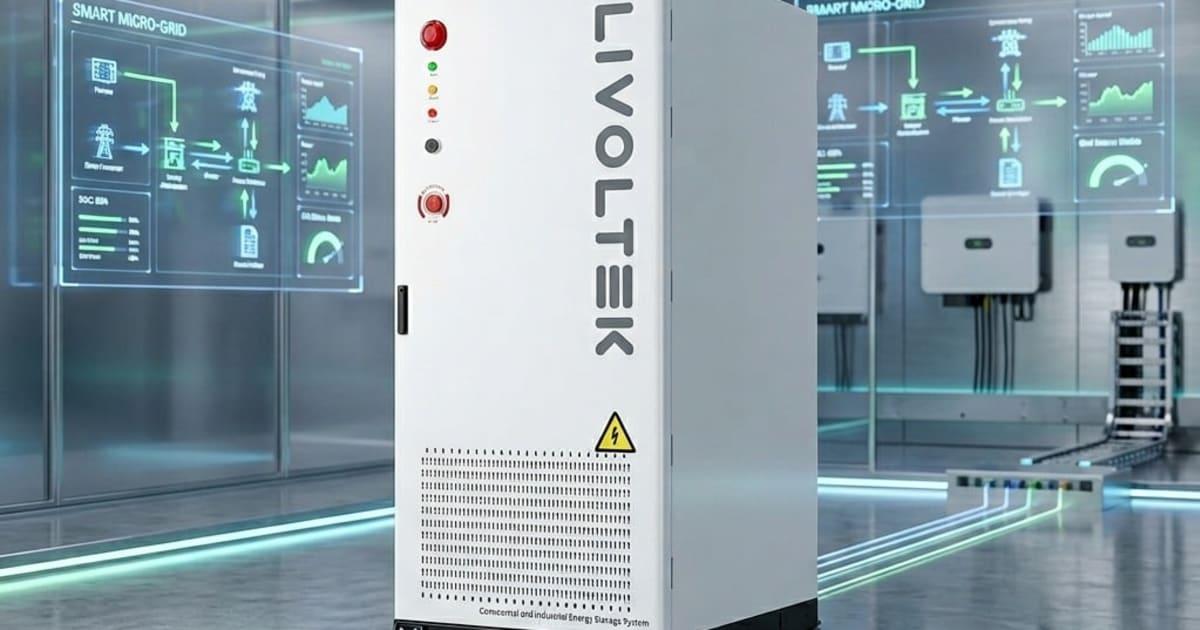
Modern integrated BESS platforms, such as the Livoltek BESS-60kW/261kWh, provide durability against dust, heat, and humidity, configurable performance for energy shifting or peak shaving, scalability for modular expansion, and a unified architecture combining batteries, Power Conversion Systems (PCS), Battery Management Systems (BMS), and Energy Management Systems (EMS) in a single platform.
A $500 million phased storage deployment could pay back in 3–4 years if it reduces peak fossil generation by 10%, offering additional benefits such as reduced grid instability, lower capacity payments, and decreased transmission congestion.
Energy policy must move from penalizing solar to incentivizing storage. Pakistan does not face a renewable energy problem—it faces a balancing problem, and grid-scale battery storage is the economic and operational solution.